
Traditional vs. Digital Marketing: What Works Best for Small Businesses
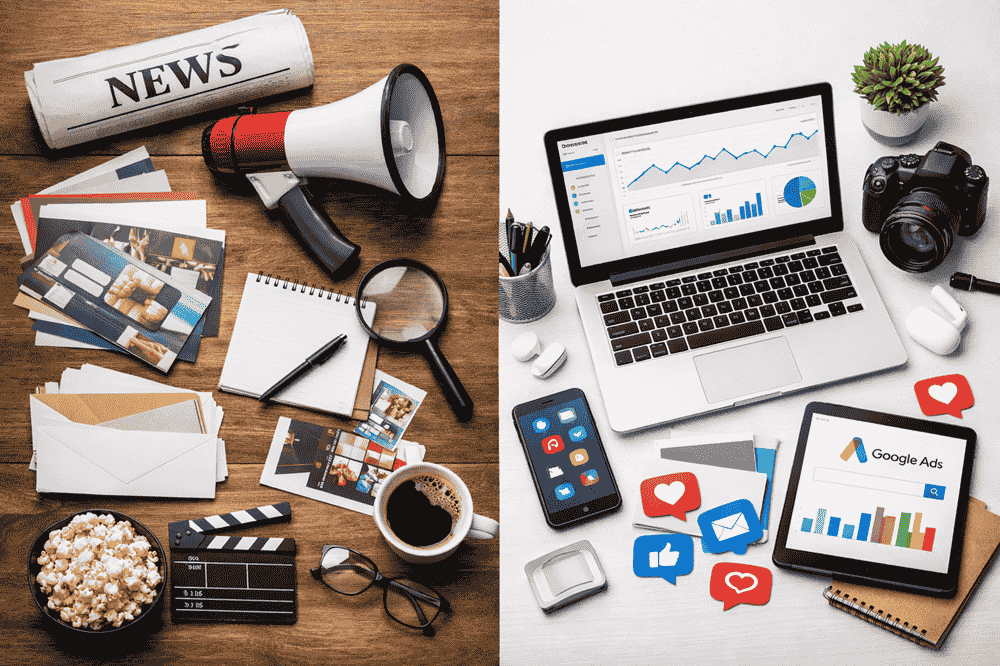
Marketing is the backbone of any successful business. For small businesses, choosing the right marketing strategy can determine growth, customer acquisition, and long-term sustainability. Traditionally, businesses relied on offline methods such as print ads, flyers, and radio spots. However, the rise of the internet and digital platforms has shifted the marketing landscape toward digital marketing.
In this guide, we’ll explore traditional vs. digital marketing, their advantages and disadvantages, and which approach works best for small businesses. By understanding these strategies, small business owners can make informed decisions that maximize their marketing ROI.
What is Traditional Marketing?
Traditional marketing refers to offline marketing strategies that existed before the digital age. These methods include:
- Print advertisements (newspapers, magazines, brochures)
- Television and radio commercials
- Direct mail campaigns
- Billboards and outdoor signage
- Networking events and trade shows
Traditional marketing has been a reliable method for decades. It focuses on reaching a broad audience, building brand recognition, and establishing credibility through physical presence.
What is Digital Marketing?
Digital marketing involves promoting products or services using online channels. This includes:
- Social media marketing (Facebook, Instagram, LinkedIn)
- Search engine optimization (SEO)
- Pay-per-click advertising (PPC)
- Email marketing campaigns
- Content marketing (blogs, videos, infographics)
Digital marketing allows small businesses to reach their target audience more precisely, measure campaign effectiveness, and adjust strategies in real-time.
Key Differences Between Traditional and Digital Marketing
Understanding the differences between these two approaches helps small businesses allocate resources effectively.
|
Feature |
Traditional Marketing |
Digital Marketing |
|
Cost |
Often higher due to print, TV, or radio ads |
Generally lower; scalable based on budget |
|
Targeting |
Broad, less precise |
Highly targeted using demographics, location, and behavior |
|
Measurability |
Hard to track ROI accurately |
Easily trackable using analytics and reporting tools |
|
Interaction |
Mostly one-way communication |
Two-way engagement; allows customer feedback |
|
Speed |
Campaigns take longer to produce and deploy |
Campaigns can launch quickly and be adjusted instantly |
Advantages of Traditional Marketing for Small Businesses
While digital marketing is on the rise, traditional marketing still has advantages:
1. Tangible Presence: Printed materials, brochures, and business cards create a physical connection with potential customers.
2. Brand Credibility: Advertising in reputable newspapers or on TV can establish trust and credibility.
3. Local Market Reach: For small businesses targeting local customers, billboards, local radio, and flyers can be effective.
4. Less Competition: In some industries, traditional channels face less competition, allowing your brand to stand out more easily.
Advantages of Digital Marketing for Small Businesses

Digital marketing has become increasingly popular due to its flexibility and efficiency. Key benefits include:
1. Precise Targeting
Digital platforms allow small businesses to target customers based on location, interests, behavior, and demographics.
2. Cost-Effectiveness
Compared to TV or print ads, digital campaigns can be more affordable, especially for small businesses with limited budgets.
3. Measurable Results
Analytics tools provide insights into website traffic, ad performance, and customer engagement, enabling data-driven decisions.
4. Greater Reach
Digital marketing allows small businesses to reach global audiences, breaking geographical limitations.
5. Engagement Opportunities
Social media and email marketing allow direct interaction with customers, increasing loyalty and brand awareness.
When Traditional Marketing Works Best
Traditional marketing is often more effective in scenarios such as:
- Targeting older demographics who may not be active online
- Building credibility through well-established offline channels
- Promoting local events, storefronts, or community-based businesses
- Leveraging large-scale media for mass awareness campaigns
For example, a local bakery may benefit from distributing flyers in the neighborhood and advertising in community newspapers.
When Digital Marketing Works Best
Digital marketing excels in situations where:
- You want measurable ROI and performance tracking
- Your target audience is active online (millennials, Gen Z)
- You need cost-effective campaigns for small budgets
- You aim to engage customers directly via social media or email campaigns
For example, an online clothing store can use social media ads and SEO strategies to reach customers nationwide efficiently.
Combining Traditional and Digital Marketing
Many successful small businesses adopt a hybrid approach, combining traditional and digital marketing. This strategy maximizes reach, engagement, and credibility. Examples include:
- Using print brochures with QR codes linking to your website
- Promoting a local event with both flyers and social media ads
- Running TV ads while supporting them with email campaigns or PPC ads
By integrating both approaches, small businesses can leverage the strengths of each and cover multiple channels for better results.
FAQs: Traditional vs. Digital Marketing
Q1: Which marketing strategy is better for small businesses?
Both have benefits. Digital marketing is often more cost-effective and measurable, while traditional marketing works well for local or offline audiences.
Q2: Can small businesses succeed using only traditional marketing?
Yes, but it may limit reach and ROI. Combining with digital marketing ensures broader audience coverage and measurable results.
Q3: How much should small businesses spend on marketing?
Marketing budgets vary, but many small businesses allocate 7–12% of revenue. A mix of traditional and digital marketing often yields the best ROI.
Q4: What is the role of SEO in digital marketing?
SEO helps small businesses rank higher on search engines, driving organic traffic and attracting potential customers online.
Q5: Can traditional marketing and digital marketing work together?
Absolutely. Hybrid strategies combine offline credibility with online engagement for maximum impact.
Conclusion: Finding the Right Marketing Strategy
Choosing between traditional vs. digital marketing depends on your business goals, target audience, and budget.
Traditional marketing builds credibility, establishes local presence, and reaches offline audiences effectively.
Digital marketing is measurable, cost-efficient, and allows precise targeting for online audiences.
Many small businesses benefit from a hybrid approach, combining both methods for maximum reach and engagement.
By understanding the strengths of each approach, small business owners can create a marketing strategy that drives growth, enhances brand visibility, and delivers measurable results. Investing wisely in the right mix of marketing strategies ensures your business stays competitive in today’s ever-changing market.
At The Digital IT Solutions, we specialize in helping businesses choose and implement the right marketing strategies to achieve real results. From SEO and Google Ads to social media marketing and website development, our team is here to support your growth.
Traditional vs. Digital Marketing: What Works Best for Small Businesses Read More »

